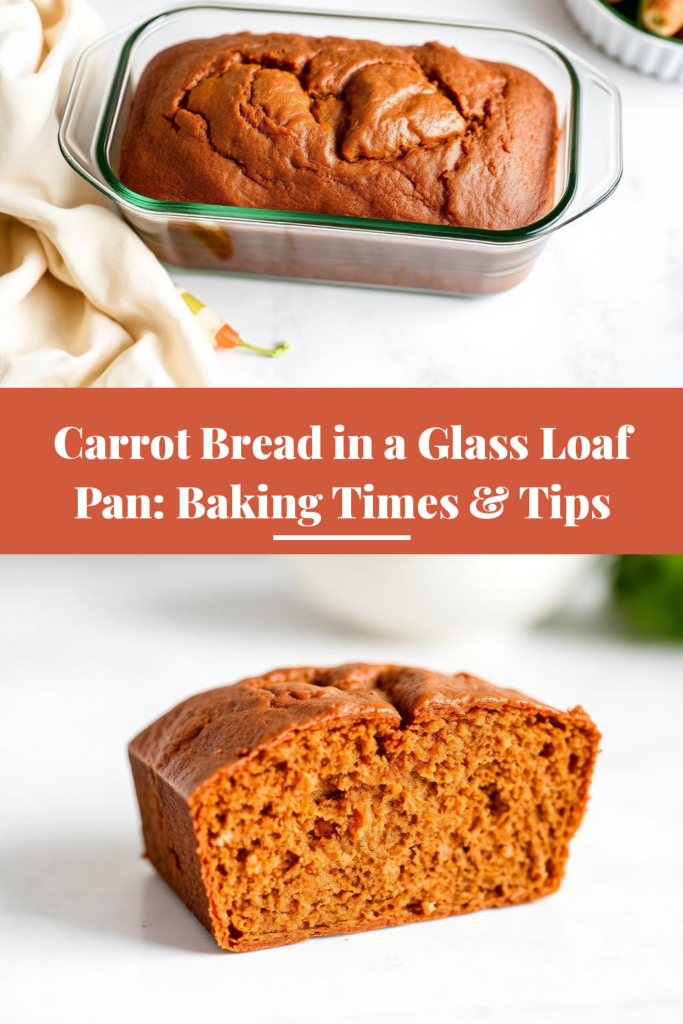
Baking carrot bread in a glass loaf pan works well, but it needs a lower oven temperature and a longer bake than metal pans because glass heats more slowly and holds heat longer. Expect a moist, tender loaf with a slightly darker crust. The key is adjusting the time and checking doneness with a thermometer or skewer.
Glass Pan Adjustments: Lower Heat, Longer Time
Glass loaf pans (typically 9×5 inches / 23×13 cm) are poor conductors compared to metal, so the batter heats unevenly unless you lower the oven temperature by 25°F (about 14°C). Bake at 325°F (163°C) instead of the usual 350°F (177°C) for metal. This prevents the outside from over-browning while the center finishes. Expect the bake time to increase by 5–10 minutes, so start checking at 55 minutes for a standard 9×5-inch loaf. If your pan is 8×4 inches (20×10 cm), the loaf is taller and will need 5–10 minutes more; if it’s a 10×5-inch (25×13 cm) pan, it will be shallower and bake faster.
Ingredients for a 9×5-Inch Loaf
- 2 cups (250 g) all-purpose flour
- 1 tsp baking soda
- 1/2 tsp baking powder
- 1/2 tsp salt
- 1 tsp ground cinnamon
- 1/2 tsp ground nutmeg (optional)
- 2 large eggs (pasteurized if you plan to eat raw batter)
- 1/2 cup (120 ml) vegetable oil or melted coconut oil
- 1/2 cup (100 g) granulated sugar
- 1/2 cup (100 g) packed brown sugar
- 1/4 cup (60 ml) milk or buttermilk
- 1 tsp vanilla extract
- 1 1/2 cups (about 170 g) finely grated carrots (about 2–3 medium carrots)
- 1/2 cup (60 g) chopped walnuts or pecans (optional)
Instructions
- Preheat the oven to 325°F (163°C). Grease a 9×5-inch (23×13 cm) glass loaf pan with butter or nonstick spray, then dust with flour, tapping out the excess.
- In a medium bowl, whisk together the flour, baking soda, baking powder, salt, cinnamon, and nutmeg.
- In a large bowl, beat the eggs, oil, granulated sugar, brown sugar, milk, and vanilla until smooth and well combined.
- Add the dry ingredients to the wet mixture and stir until just combined—do not overmix. Fold in the grated carrots and nuts, if using.
- Pour the batter into the prepared pan and smooth the top. Bake for 60–70 minutes, until a toothpick inserted into the center comes out clean or the internal temperature reads 200–205°F (93–96°C) on an instant-read thermometer. The top should be deep golden brown and the loaf should pull away from the sides slightly.
- Cool in the pan on a wire rack for 15 minutes. Then run a knife around the edges and turn the loaf out onto the rack to cool completely before slicing—at least 1 hour. Slicing warm will cause it to crumble.
Mistakes That Ruin a Glass-Pan Loaf
Baking at too high a temperature. At 350°F (177°C), the outside of a glass-pan loaf browns and forms a thick crust while the center stays raw. Always drop the temp to 325°F (163°C).
Overmixing the batter. Stirring too much develops gluten, making the bread tough and dense. Mix only until the flour disappears.
Not greasing the glass pan properly. Glass needs a thorough greasing and flouring; even a small dry spot can cause sticking. Use butter or a baking spray with flour.
Slicing too early. A loaf that hasn’t cooled completely will fall apart. Wait the full 1 hour on a rack.
Substitutions and Equipment Swaps
No glass pan? Use a 9×5-inch metal loaf pan and bake at 350°F (177°C) for 50–60 minutes, checking at 50. If you use a ceramic or stoneware pan, treat it like glass: lower the temp to 325°F (163°C) and extend the time.
Replace oil with applesauce? Use 1/2 cup (120 g) unsweetened applesauce in place of the oil. The loaf will be denser and slightly less tender, but still moist. Reduce the sugar by 2 tablespoons if you prefer less sweetness.
Buttermilk instead of milk? Use 1/4 cup (60 ml) buttermilk and reduce the baking soda to 3/4 tsp to balance acidity. The crumb will be a bit more tender.
No nuts? Omit them or substitute 1/2 cup (60 g) raisins or dried cranberries. Add them with the carrots.
Gluten-free? Replace the all-purpose flour with a 1:1 gluten-free baking flour blend that contains xanthan gum. The loaf will be slightly more crumbly; let it cool completely before slicing.
Storing and Freezing Carrot Bread
Once the loaf is completely cool, wrap it tightly in plastic wrap or aluminum foil and store at room temperature for up to 4 days. For longer storage, refrigerate for up to 1 week—cold helps prevent mold, but the bread will dry out faster. To freeze, wrap the whole loaf or individual slices in plastic wrap, then foil, and place in a freezer bag. Freeze for up to 3 months. Thaw overnight in the refrigerator or at room temperature for a few hours. Reheat slices in a toaster or microwave for 15–20 seconds to restore softness.
If you’ve added a cream cheese frosting, store the frosted loaf in the refrigerator and bring to room temperature before serving. Unfrosted bread can be stored at room temperature.
Related
- Bread Loaf Tray: How to Bake a Loaf on a Sheet Pan
- Bread Loaf Dimensions: Standard Sizes and Pan Guide
- 10 One Pan Paleo Dinner Ideas for Quick Cleanup
Safe minimum internal temperatures follow USDA FSIS; raw-fish guidance follows the U.S. FDA. See our food safety notes.
Spotted an error? Tell us and we will correct it (corrections policy).