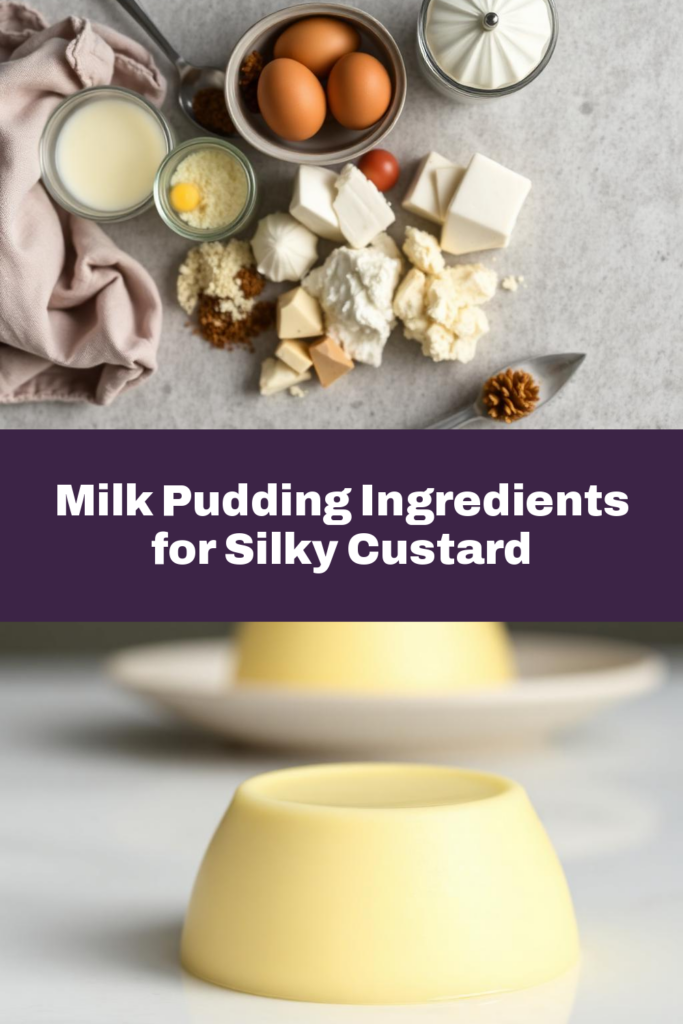
Milk pudding sets into a wobbly, spoon-soft custard that holds its shape on the plate but melts on the tongue. This version uses cornstarch as the thickener, so it needs no eggs and no oven time, only a few minutes at the stove and a chill in the fridge.
Pick the Milk and Thickener First
Whole milk gives the creamiest result because its fat keeps the starch from tasting chalky. You can use 2% milk, but the pudding will be slightly thinner and less rich. The cornstarch ratio below is for a custard that sets firmly enough to unmold; reduce the cornstarch to 2 tablespoons (16 g) for a softer, spoonable pudding.
For a dairy-free version, use full-fat oat milk or canned coconut milk (not light). Both thicken the same way, though coconut milk adds its own flavor. Avoid skim milk or almond milk; they make a thin, watery pudding.
Ingredients
- 2 cups (480 ml) whole milk
- 1/2 cup (100 g) granulated sugar
- 3 tablespoons (24 g) cornstarch
- 1/4 teaspoon salt
- 1 teaspoon vanilla extract
- 1 tablespoon (14 g) unsalted butter, optional
- Pinch of ground nutmeg or cinnamon, for serving (optional)
This makes 4 servings of about 1/2 cup (120 ml) each.
Cook the Pudding on the Stove
- In a medium saucepan, whisk together the sugar, cornstarch, and salt. Pour in about 1/2 cup (120 ml) of the milk and whisk until the starch is fully dissolved with no lumps.
- Whisk in the remaining milk. Place the saucepan over medium heat.
- Cook, stirring constantly with a whisk or wooden spoon, for 6 to 8 minutes. The mixture will thin out at first, then gradually thicken. It is ready when it coats the back of a spoon and leaves a clear trail when you run a finger through it, about 175°F (79°C) on an instant-read thermometer.
- Remove from heat. Stir in the vanilla and butter, if using, until the butter melts.
- Pour the pudding through a fine-mesh strainer into a bowl or directly into four small ramekins or cups. The strainer catches any cooked starch bits.
- Press a piece of plastic wrap directly onto the surface of the pudding to prevent a skin from forming. Refrigerate for at least 2 hours, until fully chilled and set. The pudding will thicken more as it cools.
If you want to unmold the pudding, lightly oil the ramekins with neutral oil before pouring, then run a thin knife around the edge and invert onto a plate after chilling.
Serve It Warm or Cold
Chilled pudding is the classic way to serve it, topped with a dusting of nutmeg, cinnamon, or cocoa powder. It also works warm, right after cooking, when it is still pourable; spoon it into bowls and serve within 30 minutes.
For a richer dessert, layer the pudding with crushed vanilla wafers or graham crackers and sliced bananas in a parfait glass. A spoonful of jam or fruit compote on top adds acidity that balances the sweetness. The pudding pairs well with shortbread cookies or a dollop of whipped cream.
Swap Ingredients Without Breaking the Set
- Milk: Use full-fat oat milk or canned coconut milk 1:1. The pudding will be slightly less creamy with oat milk and more coconut-flavored with coconut milk.
- Sugar: Replace up to half the granulated sugar with brown sugar for a deeper, molasses-like flavor. Use honey or maple syrup only if you reduce the milk by 2 tablespoons (30 ml) to account for the extra liquid; the pudding will be softer.
- Cornstarch: Substitute 6 tablespoons (48 g) of all-purpose flour for the cornstarch. Cook the pudding for 2 to 3 minutes longer to remove the flour taste, and expect a slightly more opaque, less glossy texture.
- Vanilla: Use 1/2 teaspoon almond extract, 1 teaspoon orange zest, or 1 tablespoon of bourbon or rum. Add these after removing the pan from heat.
- Butter: Omit it for a dairy-free pudding; the texture will be slightly less silky but still set.
Store Leftovers and Reheat Safely
Refrigerate the pudding within 2 hours of cooking. Keep it covered with plastic wrap touching the surface, or in an airtight container. It will last 3 to 4 days in the refrigerator. Do not leave it at room temperature longer than 2 hours total.
To reheat, warm it gently in a saucepan over low heat, stirring constantly, adding a splash of milk if it has thickened too much. You can also microwave individual portions in 20-second bursts, stirring between each. The pudding will never return to its original just-cooked silkiness, but it will be smooth enough to eat.
Freezing is not recommended; the cornstarch gel breaks down on thawing and the pudding turns watery and grainy. Make it fresh if you need it ahead, or store it in the fridge for up to 4 days.
If you are serving this to young children, the elderly, or anyone with a weakened immune system, use pasteurized milk and keep the pudding refrigerated until serving. This recipe contains no raw eggs or raw flour, so it is safe for all ages once fully cooked and chilled.
Related
- 3-Ingredient Microwave Mug Cake Recipe
- Four Ingredient Milk Pudding Recipe
- Coconut Milk Pudding Recipe UK
Safe minimum internal temperatures follow USDA FSIS; raw-fish guidance follows the U.S. FDA. See our food safety notes.
Spotted an error? Tell us and we will correct it (corrections policy).