Time: 1 min to read · Serves: 1 answer · The key step: Check the ingredient list on the package—if it says cassava root or manioc, it’s the same product. Tapioca flour and tapioca starch are identical: both are the powdered starch extracted from the cassava root, and the names are used interchangeably in the US and abroad. This page settles the difference (there is none), explains why both names exist, and tells you how to swap them in recipes without changing results.
Why the Two Names Mean the Same Powder
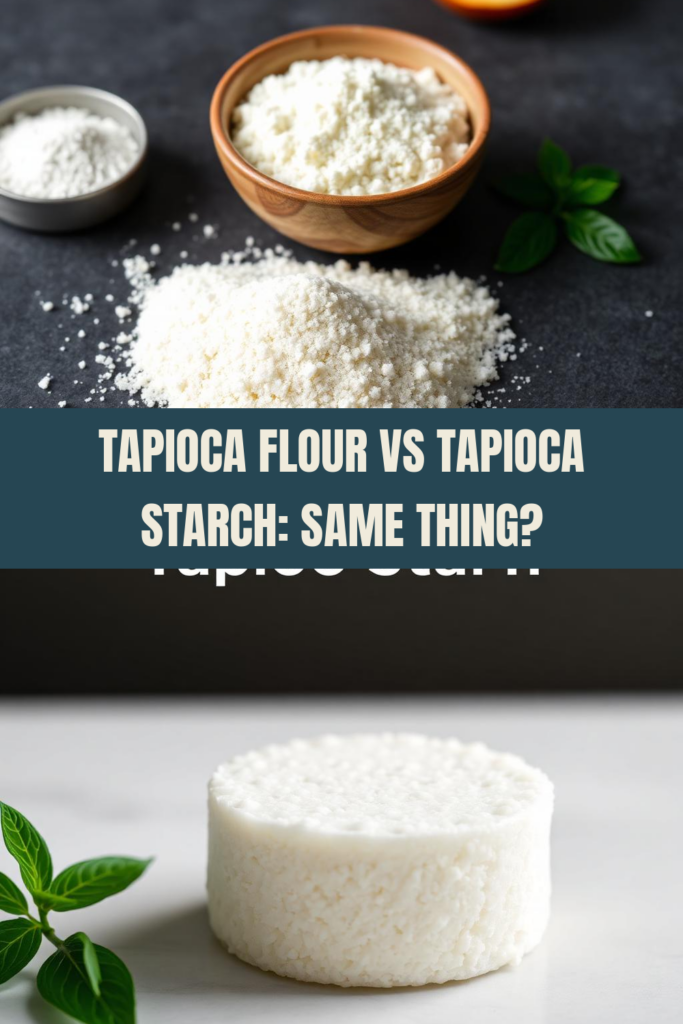
Tapioca flour and tapioca starch are the same ingredient. Both are made by washing, pulping, and drying the cassava root (also called yuca or manioc), then grinding the extracted starch into a fine white powder. The only difference is labeling: some brands print “tapioca flour,” others “tapioca starch,” and many packages list both names on the front or back. In cooking and baking, they are 100% interchangeable—use the same amount of either in any recipe.
The confusion comes from regional naming habits. In the US, “flour” often suggests a grain-based powder with protein (like wheat flour), but tapioca flour has no protein and no gluten. In other countries, “starch” is the standard term for this product. Neither name changes what’s inside the bag.
To confirm you have the right product, read the ingredient list. It should say only “tapioca starch,” “tapioca flour,” “cassava starch,” or “cassava flour.” If the label includes “cassava flour” but the ingredient list shows whole cassava root (not just starch), that’s a different product—whole cassava flour has fiber and behaves differently in recipes. The starch/flour version is what most recipes mean.
How to Swap Them in Any Recipe
Because they are the same, you can use a 1:1 swap. If a recipe calls for 1 cup (120 g) tapioca starch, measure 1 cup (120 g) tapioca flour. No adjustment for moisture, thickening power, or baking time is needed.
When measuring, use the spoon-and-level method for accuracy: fluff the powder with a fork, spoon it into a dry measuring cup, and level off the top with a straight edge. Tapioca powder settles during shipping, so scooping directly can pack in up to 15% more than intended. For a 1-cup measure, that extra can make sauces gummy or baked goods dense.
If a recipe calls for tapioca starch but you only have cassava flour (whole root), do not substitute 1:1. Whole cassava flour absorbs more liquid and has a coarser texture. Use about ¾ cup (90 g) whole cassava flour for every 1 cup (120 g) tapioca starch, and expect a denser, slightly more fibrous result. For thickening sauces, tapioca starch is the better choice because it dissolves cleanly; whole cassava flour leaves a gritty finish.
What Tapioca Starch Does in Recipes and How to Use It
Tapioca starch is a pure starch, so it has three main jobs: thickening, binding, and adding chew. Knowing these roles helps you decide when to reach for it and when to avoid it.
Thickening Sauces, Soups, and Fruit Fillings
Tapioca starch thickens at a lower temperature than wheat flour (about 140°F/60°C) and produces a clear, glossy sheen. Use it for fruit pie fillings, gravy, stir-fry sauces, and puddings. To avoid lumps, mix the starch with a cold liquid first—use 1 tablespoon (8 g) starch per 1 cup (240 ml) of liquid for a medium-thick sauce. Whisk the slurry into the hot liquid and simmer for 1–2 minutes until it clears and thickens. Do not boil for more than 2 minutes, because prolonged boiling can break down the starch and thin the sauce.
For a fruit pie, use 2–3 tablespoons (16–24 g) tapioca starch per 4 cups (about 500 g) of fruit. Toss the fruit with the starch and sugar, let it sit for 15 minutes, then bake. The starch will set as the pie cools, so don’t judge the filling while it’s hot.
Binding Gluten-Free Baked Goods
In gluten-free baking, tapioca starch adds structure and a light, crispy crust. It is often combined with other flours (like rice flour or almond flour) because it lacks protein. A typical blend uses 25–30% tapioca starch by weight. For example, a 2-cup (240 g) gluten-free flour blend might include ½ cup (60 g) tapioca starch. It helps cookies spread, gives breads a chewy crumb, and makes pizza crusts crisp on the outside.
When a recipe calls for tapioca starch and you omit it, the baked good will be dense and gummy. There is no direct substitute that behaves identically, but cornstarch can replace it in a pinch: use the same amount, but expect a slightly less chewy texture and a softer crust. Arrowroot starch also works 1:1 in most recipes, though it may make cookies more delicate.
Making Crispy Coatings and Chewy Textures
Tapioca starch is the key to crispy fried coatings (like on chicken or tofu) because it fries up shatter-crisp and stays crisp longer than wheat flour. Use it alone or mixed with rice flour for a tempura-style batter. It also gives mochi, boba pearls, and some flatbreads their signature chew. For a simple gluten-free coating, dredge pieces in tapioca starch, shake off excess, then fry at 350°F (175°C) for 4–6 minutes until golden and cooked through.
Storage and Shelf Life: How to Keep It Fresh
Store tapioca starch in an airtight container in a cool, dry pantry. It keeps for about 12 months from the purchase date if sealed properly. Over time, it can absorb moisture and develop a musty smell; if that happens, discard it. Do not refrigerate or freeze—cold temperatures can cause condensation, making the powder clump.
If you buy in bulk, transfer to a glass jar with a tight lid and label it with the purchase date. Tapioca starch does not need to be cooked to be safe, but it is a raw agricultural product, so avoid tasting it dry. Always use it in a recipe that reaches at least 140°F (60°C) if you’re concerned about pathogens, though commercial processing is designed to be safe.
Once a recipe is made, store leftovers according to the dish’s rules. Sauces thickened with tapioca keep 3–4 days refrigerated; reheat gently on the stove, adding a splash of liquid if the sauce thickened too much. Baked goods with tapioca starch keep 2–3 days at room temperature in an airtight container, or up to 3 months frozen.
When to Use Which Name in Your Own Cooking
You can use either name on your shopping list—they will buy the same product. If you’re writing a recipe for others, pick one name and stick to it, but add a note like “(also sold as tapioca starch)” to avoid confusion. When reading a recipe, assume “tapioca flour” and “tapioca starch” are the same unless the ingredient list says otherwise.
One caution: “cassava flour” on a package does not always mean starch. Some brands sell whole cassava root flour, which is a different product. Always check the ingredient list. If it says “cassava root” or “whole cassava,” that’s not the same as tapioca starch. If it says “cassava starch,” it is.
For most home cooking, keep a bag of tapioca starch on hand for thickening fruit pies, making crispy coatings, and gluten-free baking. It has a neutral taste, so it won’t alter the flavor of your dish. Just remember to mix it with cold liquid before adding to hot mixtures, and measure by weight when accuracy matters.
Related
- Coconut Milk Pudding With Corn Starch
- Coconut Flour Bread Recipe with Yeast
- Pumpkin Bread With Coconut Flour Recipe
Safe minimum internal temperatures follow USDA FSIS; raw-fish guidance follows the U.S. FDA. See our food safety notes.
Spotted an error? Tell us and we will correct it (corrections policy).