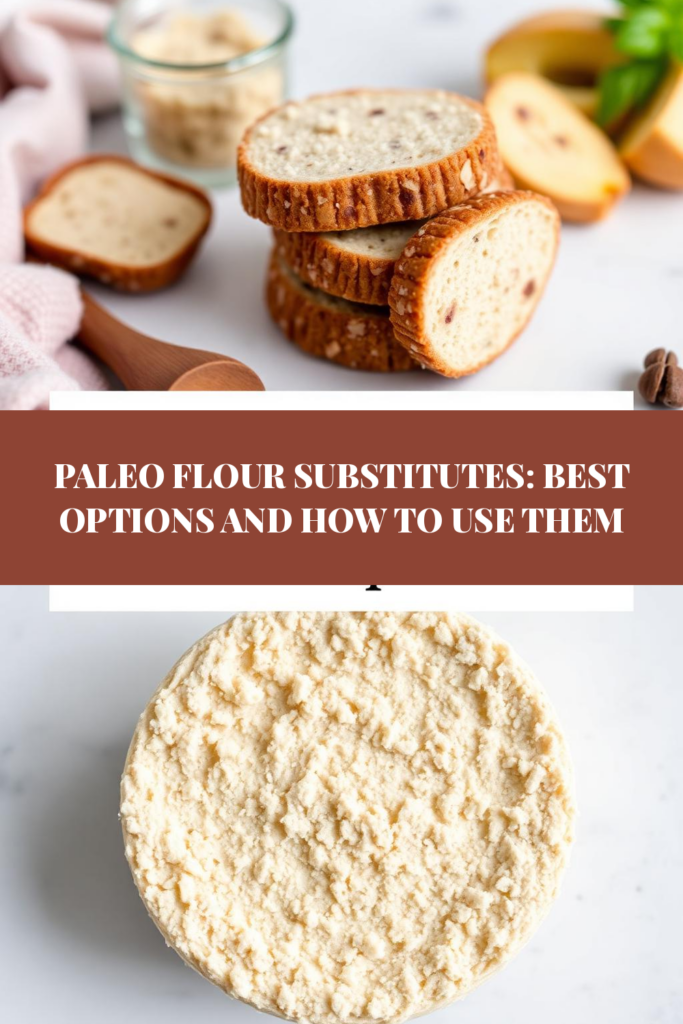
Paleo baking replaces wheat flour with nut, seed, and coconut flours. Each substitute changes the texture, moisture, and rise of the baked good, so the right choice depends on what you are making. Below are the most reliable paleo flours, with exact ratios and baking adjustments.
Which Paleo Flours Work Best for Baking?
The main paleo flours are almond flour, coconut flour, cassava flour, and tigernut flour. Each has a distinct behavior:
- Almond flour (blanched, finely ground): adds moisture, fat, and a tender crumb. Best for cookies, muffins, and quick breads.
- Coconut flour: very absorbent and high in fiber. Use about 1/4 cup (30 g) coconut flour to replace 1 cup (120 g) wheat flour, plus extra eggs and liquid.
- Cassava flour: the closest texture to wheat flour, but less absorbent. Works for tortillas, flatbreads, and some cakes.
- Tigernut flour: slightly sweet, nutty, and works well in cookies and pie crusts.
For most recipes, combine almond flour with a small amount of coconut flour to improve structure.
How Do I Replace Wheat Flour with Almond Flour?
Almond flour is a direct substitute by weight in many recipes, but it does not contain gluten, so you need more eggs or a binder. Use this ratio:
- 1 cup (120 g) all-purpose flour → 1 cup (112 g) blanched almond flour
- Add 1 extra egg per cup of almond flour for structure.
- Reduce liquid by 2–3 tablespoons (30–45 ml) because almond flour adds moisture.
Bake at the same temperature, but check for doneness 5–10 minutes earlier because almond flour browns faster. For a cookie recipe, chill the dough for 30 minutes to prevent spreading.
How Do I Replace Wheat Flour with Coconut Flour?
Coconut flour is extremely absorbent. Never substitute it 1:1. Use this ratio:
- 1 cup (120 g) wheat flour → 1/4 cup (30 g) coconut flour
- Add 6 eggs per 1/4 cup (30 g) coconut flour (or 1 egg per 2 tablespoons / 15 g).
- Add 1/2 cup (120 ml) liquid (milk, water, or oil) per 1/4 cup (30 g) coconut flour.
Whisk coconut flour thoroughly to remove lumps. Let the batter rest for 5 minutes before baking so the flour absorbs liquid. Baked goods with coconut flour are denser and more delicate; use a 9-inch (23 cm) round pan for cakes and reduce baking time by about 25%.
What About Cassava Flour and Tigernut Flour?
Cassava flour is the closest to wheat flour in texture, but it is more starchy and less absorbent. Use it 1:1 by weight (120 g per cup) in recipes for flatbreads, tortillas, and some cakes. You may need to reduce liquid by 2–4 tablespoons (30–60 ml) because cassava flour does not absorb as much. It also benefits from a binder like xanthan gum (1/2 teaspoon per cup) if you want a chewier texture, though xanthan gum is not strictly paleo.
Tigernut flour is slightly sweet and works well in cookies, muffins, and pie crusts. Use it 1:1 by weight (120 g per cup) but reduce sugar by 10–15% because it is naturally sweet. It can be used alone or combined with almond flour for a more neutral flavor.
What Is the Best Paleo Flour for Cakes, Cookies, and Bread?
Cakes
- Use a blend: 1 cup (112 g) almond flour + 1/4 cup (30 g) coconut flour + 6 eggs.
- Add 1/2 teaspoon baking soda and 1 teaspoon apple cider vinegar for lift.
- Bake at 350°F (175°C) for 25–30 minutes, until a toothpick comes out clean.
Cookies
- Use 1 cup (112 g) almond flour + 1 egg + 2 tablespoons (30 ml) coconut oil.
- Chill dough for 30 minutes, then bake at 350°F (175°C) for 10–12 minutes, until edges are golden.
Bread (quick bread or muffins)
- Use 1 cup (112 g) almond flour + 1/4 cup (30 g) coconut flour + 4 eggs + 1/4 cup (60 ml) oil.
- Add 1/2 teaspoon salt and 1 teaspoon baking soda.
- Bake at 350°F (175°C) for 30–35 minutes, until a skewer inserted in the center comes out clean.
How Do Paleo Flours Affect Baking Times and Temperatures?
Paleo flours brown faster than wheat flour because they contain natural sugars and fats. Reduce the oven temperature by 25°F (15°C) if you notice over-browning, or cover the pan with foil halfway through. Check for doneness 5–10 minutes earlier than the original wheat recipe. Use a food thermometer for breads and cakes: the center should reach 200–205°F (93–96°C). For muffins, a toothpick inserted in the center should come out clean or with a few moist crumbs.
How Should I Store Paleo Flours and Baked Goods?
Store paleo flours in an airtight container in a cool, dark place. Almond and coconut flours can go rancid quickly; refrigerate them for longer shelf life (up to 6 months) or freeze for up to 1 year. Baked goods made with paleo flours are more moist and spoil faster than wheat-based ones. Keep them refrigerated in an airtight container for up to 4 days. Most paleo baked goods freeze well for up to 3 months; wrap tightly in plastic wrap and then foil. Thaw overnight in the refrigerator.
What Are Common Substitution Mistakes and How to Fix Them?
Too dry or crumbly
Add 1–2 tablespoons (15–30 ml) of oil or milk, or an extra egg yolk. Coconut flour especially needs more liquid.
Too dense or gummy
You used too much coconut flour or too many eggs. Reduce coconut flour by 1 tablespoon (8 g) and add 1 tablespoon (15 ml) liquid.
Baked goods spread too much
Chill the dough for at least 30 minutes before baking. Also, increase the amount of almond flour by 2 tablespoons (14 g) or add 1 tablespoon (8 g) coconut flour.
Paleo Flour Substitutes for Specific Recipes
Pancakes
- Use 1 cup (112 g) almond flour + 2 eggs + 1/4 cup (60 ml) milk + 1 teaspoon baking powder.
- Cook on a griddle at 350°F (175°C) for 2–3 minutes per side, until bubbles form and edges are set.
Pizza crust
- Use 1 cup (112 g) almond flour + 1 egg + 1 tablespoon (15 ml) olive oil + 1/2 teaspoon salt.
- Roll out between two sheets of parchment paper, then bake at 400°F (200°C) for 10–12 minutes, until golden.
Breading for chicken or fish
- Use 1 cup (112 g) almond flour + 1 teaspoon garlic powder + 1/2 teaspoon salt.
- Coat the meat, then bake at 400°F (200°C) until the internal temperature reaches 165°F (74°C) for poultry or 145°F (63°C) for fish.
Paleo Flour Substitutes for Large Batches and Kids
When baking for a crowd, double the recipe but keep the same ratios. Use a larger pan (e.g., 9×13-inch / 23×33 cm) and increase baking time by 5–10 minutes. For kids, use a blend of almond and cassava flour to get a milder flavor and softer texture. You can also make mini muffins: bake at 350°F (175°C) for 12–15 minutes, until a toothpick comes out clean. Let them cool completely before storing.
Related
- Coconut Flour Bread Recipe with Yeast
- Pumpkin Bread With Coconut Flour Recipe
- Coconut Flour Bread: Texture, Recipe, and How to Bake It
Safe minimum internal temperatures follow USDA FSIS; raw-fish guidance follows the U.S. FDA. See our food safety notes.
Spotted an error? Tell us and we will correct it (corrections policy).