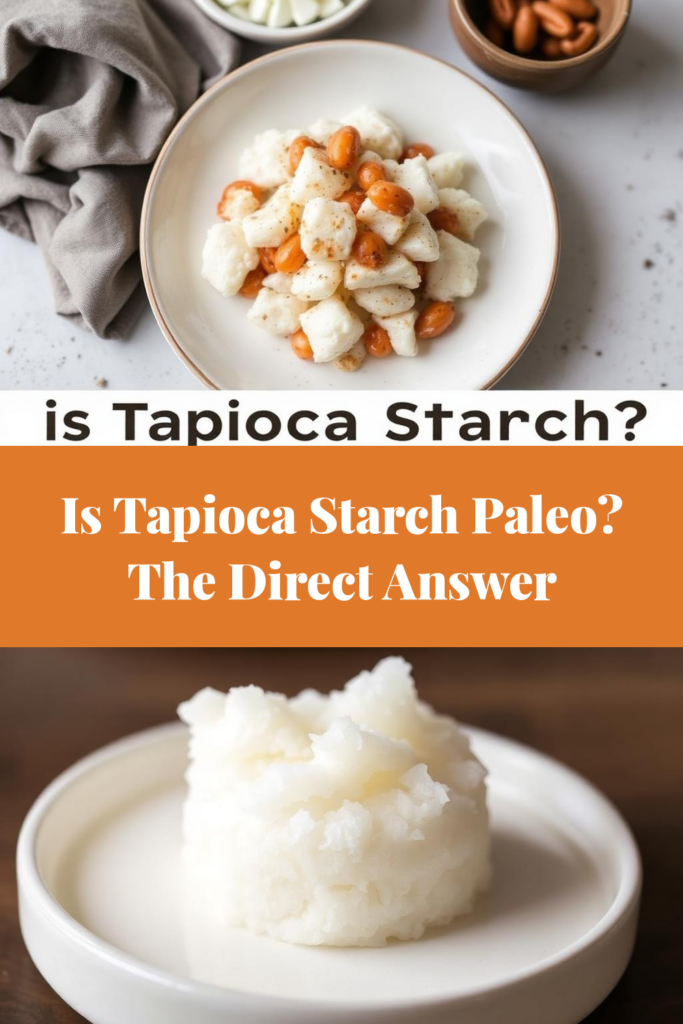
No, tapioca starch is not paleo. It is a refined, processed starch extracted from the cassava root, and the paleo diet excludes refined starches and processed foods, even if they come from a plant.
Why Tapioca Starch Fails Paleo Rules
The paleo diet is built around whole, unprocessed foods that would have been available to hunter-gatherers: meat, fish, eggs, vegetables, fruits, nuts, and seeds. Tapioca starch is made by washing, peeling, and grinding cassava root, then drying the extracted starch into a fine powder. That processing removes nearly all fiber, protein, and micronutrients, leaving mostly pure carbohydrate. Paleo guidelines specifically exclude refined grains and refined starches, and tapioca starch falls into that category.
Some paleo followers make an exception for small amounts of tapioca starch in baking or as a thickener, but strict paleo does not allow it. The same logic applies to other refined starches like arrowroot powder, potato starch, and cornstarch—they are all processed extracts, not whole foods.
What Tapioca Starch Is Made From
Tapioca starch comes from the cassava root, a starchy tuber native to South America. The root is peeled, washed, and grated, then the pulp is soaked and squeezed to release the starch. The liquid is dried, leaving the white powder sold as tapioca starch or tapioca flour. In the US, the two terms are used interchangeably, though some brands label the finer grind as flour.
Cassava itself is a whole food, but by the time it becomes tapioca starch, it is a refined ingredient. The starch is about 90% carbohydrates and contains negligible protein or fat. It has a neutral flavor and is often used as a gluten-free thickener for sauces, puddings, and pie fillings, or as a binder in gluten-free baked goods.
Common Paleo Substitutes for Tapioca Starch
If you need a thickener or a baking starch and you are strict paleo, these are the closest whole-food options:
| Substitute | Source | How It Works |
|---|---|---|
| Arrowroot powder | Arrowroot root | Similar neutral flavor; use equal amount; thickens at lower temperature |
| Cassava flour | Whole cassava root, dried and ground | Not the same as starch; use about 1.5x the amount for thickening; adds fiber |
| Kuzu (kudzu) starch | Kudzu root | Traditional Japanese thickener; use equal amount; glossy finish |
| Sweet potato starch | Sweet potato | Use equal amount; slightly sweet taste; good for baking |
Arrowroot is the closest swap for tapioca starch in most recipes. It thickens at a lower temperature and makes a clearer gel, so it works well in fruit sauces and glazes. Cassava flour is not a direct substitute for starch because it contains the whole root, so it behaves differently in baking and thickening.
What to Do If You Are Paleo and Want a Thickener
If you are following paleo and a recipe calls for tapioca starch, you have three options: substitute arrowroot powder, reduce the liquid and skip the thickener, or use a whole-food thickener like pureed vegetables or fruit. For soups and stews, you can often mash some of the cooked vegetables or add a handful of cooked pumpkin or sweet potato to thicken naturally.
For paleo baking, many recipes use a blend of almond flour and coconut flour instead of starch. If a recipe specifically needs tapioca starch for structure, try arrowroot powder in the same amount. Note that arrowroot can make baked goods slightly more gummy if overused, so start with a little less and add more if needed.
Is Tapioca Starch Gluten-Free or Grain-Free?
Tapioca starch is naturally gluten-free and grain-free, which is why it appears in many gluten-free and grain-free recipes. However, paleo is stricter than gluten-free or grain-free—it excludes all refined starches, regardless of the source. So while tapioca starch is safe for a gluten-free diet, it is not paleo.
If you are gluten-free but not paleo, you can use tapioca starch freely. If you are paleo, you should avoid it and use arrowroot instead.
How to Check a Product Label
When buying any starch or flour, read the ingredient list. Tapioca starch should list only tapioca starch or cassava starch. Some products mix tapioca with other flours or add anti-caking agents, which would also be non-paleo. Look for a single-ingredient product if you choose to use it despite the paleo restriction.
Also note that tapioca pearls (boba) are made from tapioca starch and are not paleo either. They are a processed food with added sugar and often other additives.
In short: tapioca starch is not paleo because it is a refined starch. Use arrowroot powder or whole-food thickeners if you need a paleo-friendly option.
Related
Safe minimum internal temperatures follow USDA FSIS; raw-fish guidance follows the U.S. FDA. See our food safety notes.
Spotted an error? Tell us and we will correct it (corrections policy).