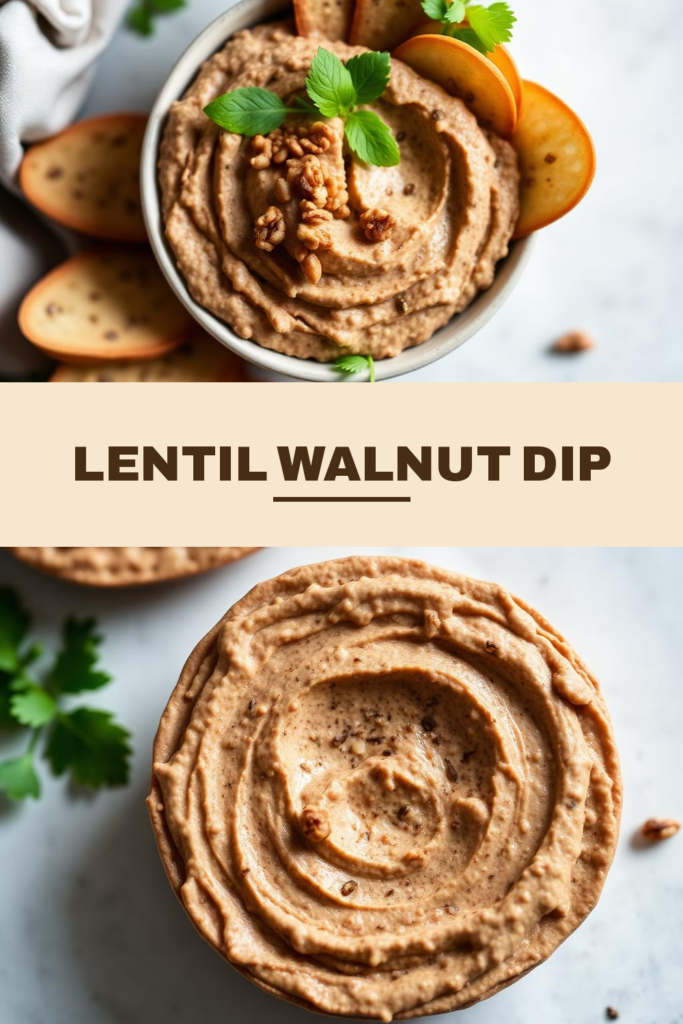
This lentil walnut dip is a hearty, savory spread with a meaty texture and a toasty, nutty flavor. It works as a party appetizer, a sandwich spread, or a vegetarian main when served with warm flatbread. The combination of earthy lentils and rich walnuts needs no cheese or cream to feel satisfying.
Ingredients
- 1 cup (200 g) dried brown or green lentils, rinsed
- 3 cups (720 ml) water
- 1 cup (120 g) raw walnuts
- 3 tablespoons (45 ml) olive oil, plus more for serving
- 2 cloves garlic, minced
- 1 small shallot (about 30 g), chopped
- 2 tablespoons (30 ml) lemon juice, plus more to taste
- 1 teaspoon ground cumin
- 1/2 teaspoon smoked paprika (optional)
- 1/2 teaspoon salt, plus more to taste
- 1/4 teaspoon black pepper
- 2 tablespoons (30 g) plain yogurt or tahini (optional, for creaminess)
- Fresh parsley or chives for garnish (optional)
Instructions
- Place the rinsed lentils and water in a medium saucepan. Bring to a boil over high heat, then reduce to a simmer. Cook uncovered for 25–30 minutes, until the lentils are very tender and easily mashed with a fork. Drain any excess water and let cool for 5 minutes.
- While the lentils cook, spread the walnuts on a baking sheet. Toast in a 350°F (175°C) oven for 8–10 minutes, shaking once, until fragrant and lightly browned. Let cool completely.
- In a small skillet, heat 1 tablespoon of the olive oil over medium heat. Add the garlic and shallot, and cook for 2–3 minutes, until soft and translucent. Remove from heat.
- In a food processor, combine the toasted walnuts, cooked lentils, garlic-shallot mixture, remaining 2 tablespoons olive oil, lemon juice, cumin, smoked paprika (if using), salt, and pepper. Process for 1–2 minutes, scraping down the sides, until the mixture is smooth but still has some texture. If using yogurt or tahini, add it during processing.
- Taste and adjust seasoning with more lemon juice or salt. The dip should be thick but spreadable; if too thick, add warm water 1 tablespoon at a time and pulse to combine.
- Transfer to a serving bowl. Drizzle with olive oil and sprinkle with parsley or chives if desired. Serve warm or at room temperature.
What to Swap When You’re Out of an Ingredient
This dip is flexible, but each swap changes the texture or flavor slightly.
- Lentils: Use red lentils, but reduce cooking time to 15–20 minutes and expect a softer, more paste-like dip. Canned lentils (about 1.5 cups drained) work, but skip the boiling step and drain well.
- Walnuts: Pecans or hazelnuts give a similar richness. Pecans are sweeter; hazelnuts add a more pronounced nutty flavor. Toast them the same way.
- Olive oil: Use a neutral oil like avocado or grapeseed for a milder taste, but you’ll lose some fruity notes.
- Lemon juice: White wine vinegar or apple cider vinegar can replace it 1:1, but start with less (1.5 tablespoons) and add more to taste.
- Yogurt/tahini: Omit for a vegan, dairy-free version; the dip will be slightly less creamy. If using tahini, add an extra 1–2 teaspoons of water to loosen it.
How to Make It Ahead and Store It
This dip actually tastes better after a few hours in the fridge, as the flavors meld. You can make it up to 3 days ahead.
- Make ahead: Prepare the dip fully, let it cool to room temperature, then cover and refrigerate in an airtight container for up to 3 days. Bring to room temperature or warm gently before serving.
- Freezer: Freeze in a freezer-safe container for up to 2 months. Thaw overnight in the refrigerator. The texture may become slightly drier; stir in a little olive oil or water when reheating.
- Reheating: Warm in a saucepan over low heat, stirring, or in the microwave in 20-second bursts. Add a splash of water if it thickens too much.
- Food safety: Never leave the dip at room temperature for more than 2 hours (1 hour if above 90°F/32°C). Refrigerate leftovers promptly in a sealed container.
What to Serve With Lentil Walnut Dip
This dip is thick enough to scoop with sturdy vegetables or bread. It pairs well with:
- Warm pita bread, naan, or crusty baguette slices
- Raw vegetables: carrot sticks, cucumber rounds, bell pepper strips, or celery
- As a spread on sandwiches or wraps, especially with roasted vegetables or grilled chicken
- Alongside a grain bowl with rice or quinoa and a simple salad
- Dolloped on top of a green salad as a protein-rich dressing alternative
Why This Dip Needs Toasted Walnuts
Toasting the walnuts is not optional. Raw walnuts taste bitter and slightly astringent; toasting at 350°F (175°C) for 8–10 minutes brings out their natural oils and sweetness, and deepens the nutty flavor. Watch them closely—they can go from toasted to burnt in under a minute. Let them cool completely before blending, or the heat will make the dip greasy.
How to Fix a Dip That’s Too Thin or Too Thick
If the dip is too thin after blending, it usually means too much water was left in the lentils or too much oil was added. Fix it by adding more walnuts (about 1/4 cup) and processing again. If it’s too thick, add warm water 1 tablespoon at a time, pulsing after each addition, until it reaches a creamy, spreadable consistency. The dip should hold its shape on a spoon but not be stiff.
Can You Use Canned Lentils Instead?
Yes, canned lentils work well and cut the cooking time significantly. Use one 15-ounce (425 g) can, drained and rinsed well. Skip the boiling step; add the drained lentils directly to the food processor with the other ingredients. The dip will be slightly softer because canned lentils are more waterlogged, so you may need to add a few extra walnuts or reduce the olive oil by 1 tablespoon. If you do use canned lentils, there’s no need to cool them first, but the dip will taste better if you let the flavors sit for 30 minutes before serving.
Related
Safe minimum internal temperatures follow USDA FSIS; raw-fish guidance follows the U.S. FDA. See our food safety notes.
Spotted an error? Tell us and we will correct it (corrections policy).