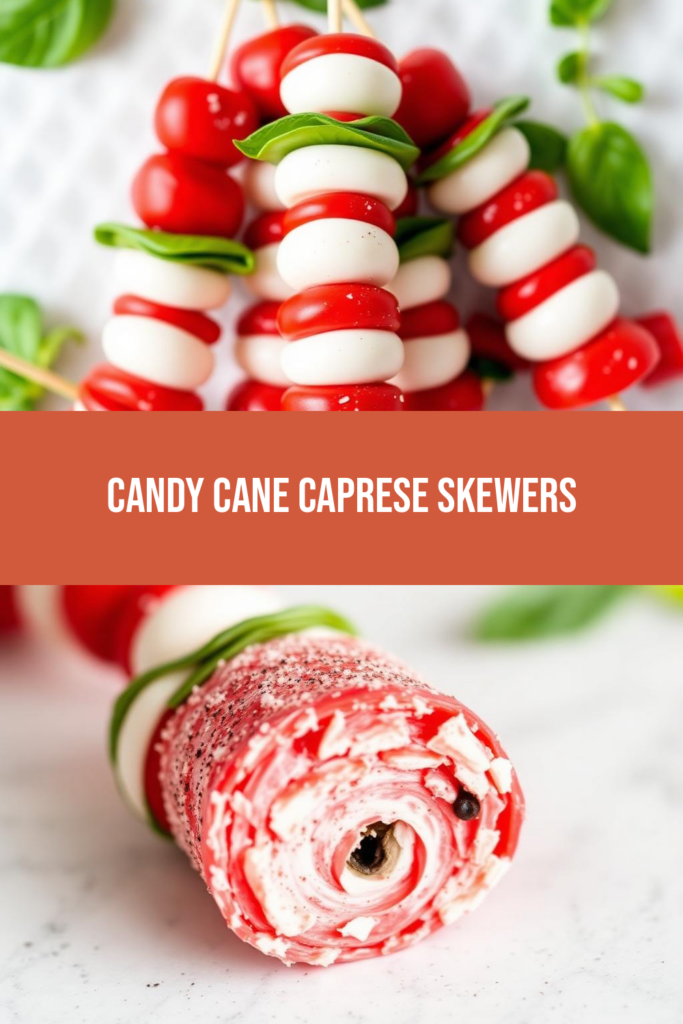
Time: 25 minutes · Serves: 12 skewers · The key step: alternate cherry tomatoes and mozzarella balls on small skewers, then drizzle with balsamic glaze. These festive skewers look like candy canes when arranged in a curve on a platter. They taste like classic caprese—juicy tomatoes, creamy mozzarella, and fresh basil—with a sweet-tart balsamic finish. Perfect for holiday parties, potlucks, or a fun appetizer for kids and adults alike.
Ingredients
- 24 cherry or grape tomatoes (about 1 pint / 300 g)
- 24 small fresh mozzarella balls (bocconcini or ciliegine, about 8 oz / 225 g)
- 24 fresh basil leaves
- 2 tbsp (30 ml) balsamic glaze (store-bought or homemade, see note)
- 12 small skewers (6-inch / 15 cm) or cocktail picks
Note: If you don’t have balsamic glaze, simmer 1/2 cup (120 ml) balsamic vinegar with 1 tbsp (15 g) brown sugar until reduced to about 2 tbsp (30 ml), about 10 minutes. Cool before using.
Instructions
- Rinse tomatoes and pat dry. Drain mozzarella balls and pat dry with paper towels.
- For each skewer, thread one tomato, one basil leaf (folded if large), one mozzarella ball, and another tomato. Repeat with remaining skewers.
- Arrange the skewers on a serving platter in a curved candy cane shape: start at the top, curve down, then hook at the bottom. You can make one large candy cane or several small ones.
- Drizzle the balsamic glaze over the skewers just before serving. Serve immediately.
Why Skewers Turn Out Soggy or Slippery—and How to Fix It
Three common issues happen with caprese skewers: tomatoes slide off, mozzarella makes everything wet, or the basil wilts. Here’s what causes each and how to avoid them.
Tomatoes slide off the skewer
If the tomatoes are too ripe or the skewer is too thin, they can slip. Use firm cherry tomatoes and skewers with a pointed end. Thread the tomato through the stem end first, which is firmer. If using wooden skewers, look for ones about 1/8 inch (3 mm) thick.
Mozzarella makes the platter watery
Fresh mozzarella is packed in water or brine. If you don’t dry it well, the skewers will be slippery and the platter will have puddles. Pat each ball dry with paper towels before threading. For extra dryness, let the mozzarella sit on a paper towel-lined plate for 10 minutes before assembling.
Basil turns dark or wilts
Basil leaves bruise easily and darken when cut or crushed. Use whole small leaves, or fold larger leaves gently. Add the basil just before serving if you’re making the skewers ahead. If you must assemble in advance, keep the basil separate and tuck it onto the skewers right before serving.
Scaling for a Half or Double Batch
This recipe is easy to scale. The table below gives quantities for half and double batches. For a half batch, use 6 skewers; for a double batch, use 24 skewers.
| Ingredient | Half (6 skewers) | Full (12 skewers) | Double (24 skewers) |
|---|---|---|---|
| Cherry tomatoes | 12 (about 1/2 pint / 150 g) | 24 (about 1 pint / 300 g) | 48 (about 2 pints / 600 g) |
| Mozzarella balls | 12 (about 4 oz / 110 g) | 24 (about 8 oz / 225 g) | 48 (about 16 oz / 450 g) |
| Basil leaves | 12 | 24 | 48 |
| Balsamic glaze | 1 tbsp (15 ml) | 2 tbsp (30 ml) | 4 tbsp (60 ml) |
How to Make Ahead and Store
Assemble the skewers up to 4 hours ahead, but keep them covered in the refrigerator. Do not add the balsamic glaze until just before serving, as it can make the tomatoes soggy. If you need to store leftovers, place them in an airtight container and refrigerate for up to 2 days. The mozzarella will release liquid, so drain any excess before serving again. Do not freeze the skewers—the texture of the tomatoes and mozzarella will suffer.
For a party, arrange the skewers on a platter, cover with plastic wrap, and refrigerate. Take them out 15 minutes before serving to take the chill off, but do not leave them at room temperature for more than 2 hours total (1 hour if the room is above 90°F/32°C).
Variations That Keep the Candy Cane Look
You can change the ingredients without losing the shape. Here are three easy swaps and how each affects the result.
Use yellow or orange tomatoes
Replace half the red tomatoes with yellow pear or orange cherry tomatoes for a brighter look. The flavor is similar, but the texture may be slightly softer. Choose firmer varieties.
Add a drizzle of olive oil
Before the balsamic glaze, brush the skewers with a little extra-virgin olive oil (about 1 tbsp / 15 ml for a full batch). This adds richness and helps the glaze stick, but it can make the skewers more slippery. Use a light hand.
Use pesto instead of basil leaves
If fresh basil is unavailable, use a small dollop of basil pesto (about 1 tsp / 5 ml per skewer) instead of a whole leaf. Spread it on the mozzarella before threading. The pesto adds a nutty, garlicky flavor, but it can be messy. Keep the skewers upright until serving to avoid smearing.
How to Shape the Candy Cane on a Platter
The candy cane shape is the point of this recipe, so take a minute to arrange it well. Use a large round or oval platter. Start at the top center, place the first skewer pointing down. Continue placing skewers in a gentle curve to the right, then hook the bottom by turning left and curling upward. For a single candy cane, you’ll need about 12 skewers in a row. For smaller individual canes, group 3 skewers each into a small hook shape. If you have extra skewers, place them along the curve to fill gaps.
If the skewers are too long for the platter, trim them with kitchen scissors before assembling. Always leave about 1/2 inch (1 cm) of skewer exposed at each end for easy picking.
What to Serve With These Skewers
These skewers are a standalone appetizer, but they pair well with other finger foods. Serve them alongside a cheese board, olives, or crostini with prosciutto. For a holiday party, they fit right in with other red-and-white snacks like popcorn balls or peppermint bark. If you want a main dish, serve the skewers as a side to grilled chicken or fish—the balsamic glaze complements both.
Frequently Asked Questions (Real Answers)
Can I use regular mozzarella instead of bocconcini?
Yes, but you’ll need to cut it into 1/2-inch (1 cm) cubes. Regular mozzarella is drier than fresh bocconcini, so it holds up well on skewers. The flavor is milder, so you may want to add a pinch of salt to each skewer.
What if I don’t have skewers?
Use toothpicks or short cocktail picks. For a candy cane shape, you can arrange the picks in a curve on a platter—they don’t need to be long. Alternatively, use small rosemary sprigs (remove the leaves from the bottom half) as natural skewers; they add a subtle herb flavor.
Can I make these vegan?
Yes, substitute the mozzarella with a firm vegan mozzarella-style block, cut into cubes. Look for one that melts well but is firm enough to skewer. The taste will differ, but the candy cane look remains. Check the label to ensure the product is suitable for your dietary needs.
Is balsamic glaze the same as balsamic vinegar?
No. Balsamic glaze is thicker and sweeter because it’s reduced. If you use regular balsamic vinegar, it will be thin and runny, and the skewers will be wet. Use a glaze or reduce the vinegar yourself as noted in the ingredient list.
Food Safety Notes
These skewers contain no meat, poultry, or eggs, so no internal temperature is required. However, keep the assembled skewers refrigerated until serving. Perishable ingredients (tomatoes and mozzarella) should not sit at room temperature for more than 2 hours (1 hour if the room is above 90°F/32°C). After serving, refrigerate leftovers within that window. Do not leave them out overnight.
Safe minimum internal temperatures follow USDA FSIS; raw-fish guidance follows the U.S. FDA. See our food safety notes.
Spotted an error? Tell us and we will correct it (corrections policy).