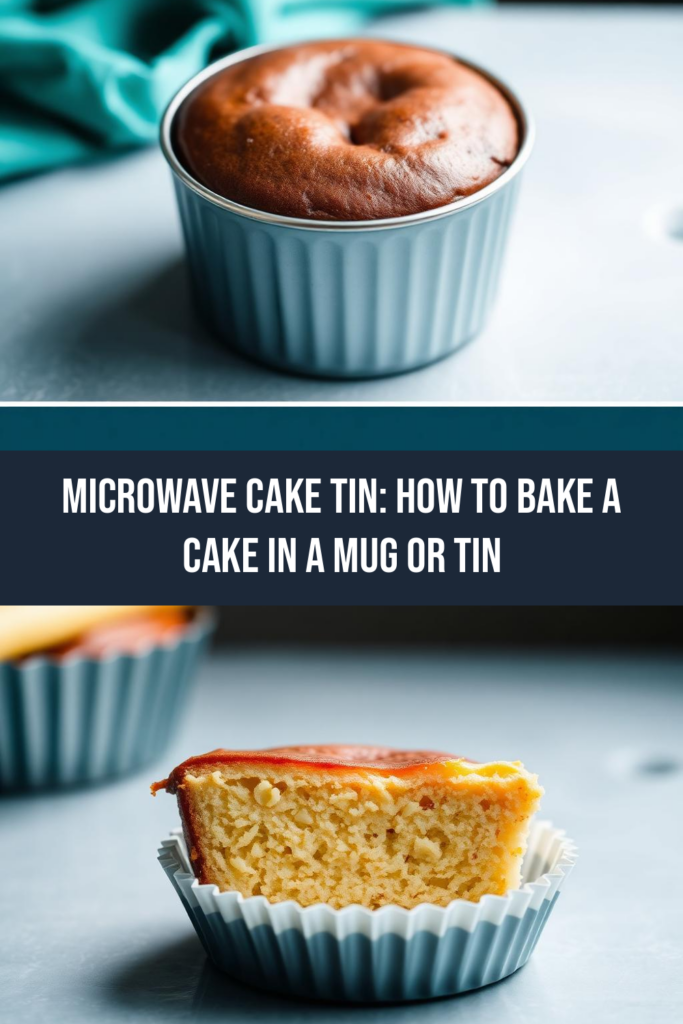
A microwave cake tin is any microwave-safe dish—a mug, a ramekin, or a small silicone or glass pan—used to bake a single-serving or small cake in the microwave. The result is a moist, tender cake that cooks in under two minutes, perfect for a quick dessert or a late-night snack. Below is a basic vanilla mug cake that works in any microwave-safe mug or small tin.
Ingredients
- 4 tbsp (30 g) all-purpose flour
- 3 tbsp (40 g) granulated sugar
- 1/4 tsp baking powder
- 1/8 tsp salt
- 3 tbsp (45 ml) milk (any kind)
- 2 tbsp (30 ml) neutral oil (vegetable, canola, or sunflower)
- 1/2 tsp vanilla extract
- 1 tbsp (15 g) chocolate chips (optional)
Instructions
- In a microwave-safe mug or small tin (about 12 oz / 350 ml capacity), whisk together the flour, sugar, baking powder, and salt with a fork until no lumps remain.
- Add the milk, oil, and vanilla extract. Stir until the batter is smooth and no dry flour is visible. If using chocolate chips, fold them in now.
- Microwave on high (1000 W) for 1 minute to 1 minute 30 seconds. Check at 1 minute: the cake should be set on top and just starting to pull away from the sides. If it is still wet in the center, microwave in 10-second bursts until set. Times vary by microwave wattage and mug size; a 700 W microwave may need 2 minutes, a 1200 W may need only 1 minute.
- Let the cake cool in the mug for 2 to 3 minutes before eating. It will continue to firm up as it cools.
Choosing a Microwave-Safe Tin
Use a mug, ramekin, or small glass or ceramic dish that holds at least 12 oz (350 ml) so the cake has room to rise without overflowing. Silicone molds work too, but they are more flexible—place them on a microwave-safe plate before filling. Do not use metal tins, metal-trimmed mugs, or any dish labeled not microwave-safe. Check the bottom of the dish for a microwave-safe symbol or wording. Fill the tin no more than halfway with batter; the cake will rise during cooking.
Adjusting Cook Time by Microwave Wattage
Microwave power varies widely. A 1000 W microwave cooks this cake in about 1 minute 15 seconds; a 700 W microwave needs closer to 1 minute 45 seconds to 2 minutes. Start with the shorter time and add 10-second bursts. The cake is done when the top is set and a toothpick inserted in the center comes out with only a few moist crumbs, not wet batter. If the top is dry but the center is raw, reduce power to 80% next time and cook slightly longer.
Flavor Variations
Swap the vanilla extract for 1/2 teaspoon of almond extract or 1 tablespoon of cocoa powder (reduce flour to 3 tbsp / 22 g) for a chocolate version. Add 1/2 teaspoon of cinnamon with the dry ingredients for a spice cake. For a lemon version, replace the milk with lemon juice and add 1 teaspoon of lemon zest. Each change alters the taste but not the cooking time.
Serving Ideas
Eat the cake straight from the mug with a spoon, or turn it out onto a plate after cooling for 5 minutes. Top with a scoop of vanilla ice cream, a drizzle of chocolate syrup, or a dusting of powdered sugar. This cake is best served warm, within 10 minutes of cooking.
Leftovers and Storage
Microwave cakes are best eaten immediately; they dry out and become rubbery as they cool. If you must store one, wrap it tightly in plastic wrap and refrigerate for up to 2 days. To reheat, microwave on high for 15 to 20 seconds until warm. Do not leave the cake at room temperature for more than 2 hours. If you added chocolate chips, they will melt and firm up again on cooling—that is normal.
Why This Works in a Mug
The small volume and high surface area of a mug allow the microwave energy to heat the batter evenly and quickly. Baking powder provides lift in the short cooking time, and the oil keeps the crumb moist. Using a mug that is too small causes overflow; using one too large makes the cake thin and dry. The batter is intentionally small—about 1/2 cup (120 ml)—so it fits standard mugs.
Safe minimum internal temperatures follow USDA FSIS; raw-fish guidance follows the U.S. FDA. See our food safety notes.
Spotted an error? Tell us and we will correct it (corrections policy).





