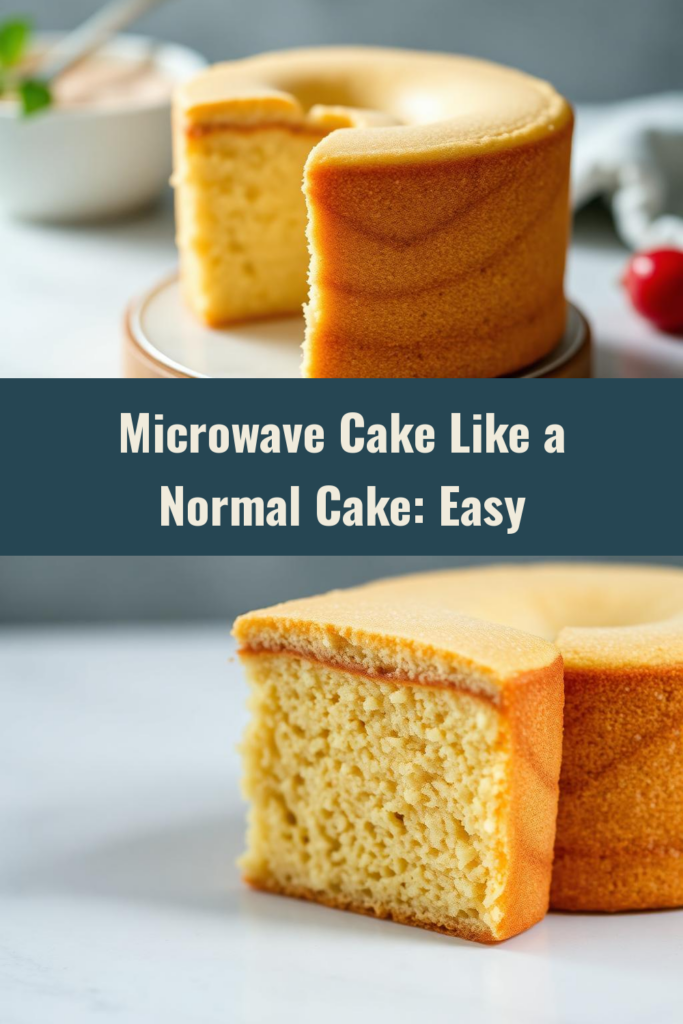
Time: 5 minutes prep, 2-4 minutes cook · Serves: 1 · The key step: Use a wide, shallow mug or ramekin and stop cooking while the center still looks slightly moist. This single-serving microwave cake has a tender crumb and a lightly sweet vanilla flavor, ready in under 10 minutes for a quick dessert or snack.
Ingredients
- 3 tbsp (24 g) all-purpose flour
- 2 tbsp (25 g) granulated sugar
- 1/4 tsp baking powder
- 1/8 tsp salt
- 2 tbsp (30 ml) milk (any kind)
- 1 tbsp (15 ml) neutral oil (vegetable or canola) or melted butter
- 1/4 tsp vanilla extract
- 1 large egg yolk (pasteurized if you prefer; the cake is fully cooked)
Instructions
- In a small bowl, whisk together the flour, sugar, baking powder, and salt.
- Add the milk, oil, vanilla, and egg yolk. Stir until just combined; a few small lumps are fine. Do not overmix.
- Pour the batter into a microwave-safe mug or ramekin that holds at least 12 oz (355 ml). The mug should be wide at the top, not tall and narrow, so the cake cooks evenly.
- Microwave on high for 90 seconds. Check the cake: the top should look set but slightly moist in the center. If it is still very wet, microwave in 15-second bursts, checking each time, up to 2 minutes total. The cake is done when a toothpick inserted in the center comes out with a few moist crumbs, not wet batter. The internal temperature should reach 160°F (71°C) for egg dishes, per USDA FSIS safe minimum.
- Let the cake stand in the microwave for 1 minute. It will continue to firm up as it cools. Serve warm directly from the mug, or turn it out onto a plate.
Why It’s Not Like a Normal Cake
A microwave cake is denser and more tender than an oven-baked cake because it cooks with rapid, intense heat from the inside out. The crumb is closer to a steamed pudding or a very moist muffin. It will not brown on top, and it will not rise as high. To get the texture closest to a normal cake, use a mug that is wider than it is tall, and do not overcook—the center should still look slightly shiny when you pull it out.
How to Fix a Dry or Soggy Cake
Dry, rubbery cake: You cooked it too long. The microwave continues to cook the cake after it is removed, so stop at the first sign of the center looking set. Next time, reduce the initial cook time to 75 seconds and check.
Soggy, sunken middle: The batter was too wet or the mug was too small. Use the exact ingredient amounts and a mug that holds at least 12 oz (355 ml). If the center is still raw after 2 minutes, the batter was likely too thin—add 1 tsp (5 g) more flour next time.
Uneven cooking: The mug was too tall and narrow. The edges cook faster than the center. Use a wide, shallow ramekin or mug, and stir the batter once before microwaving to distribute the baking powder.
Flavor Variations
Chocolate: Replace 1 tbsp (8 g) of the flour with 1 tbsp (8 g) unsweetened cocoa powder. Add 1 tbsp (15 g) chocolate chips if you like.
Lemon: Replace the vanilla with 1/2 tsp lemon zest and use 1 tbsp (15 ml) lemon juice instead of 1 tbsp (15 ml) of the milk.
Cinnamon sugar: Add 1/4 tsp ground cinnamon to the dry ingredients and sprinkle the top with 1 tsp (4 g) sugar after cooking.
Each variation changes the flavor but keeps the same cooking time and method.
Storing and Reheating
This cake is best eaten immediately. If you have leftovers, wrap the cooled cake tightly in plastic wrap and refrigerate for up to 2 days. To reheat, microwave on high for 20-30 seconds until warm. Do not freeze—the texture becomes rubbery. Always refrigerate within 2 hours of cooking, and discard any cake left at room temperature longer than that.
Making It for Two
To make two servings, double all ingredients and divide the batter between two mugs. Microwave each mug separately for the same time, or cook both together for 2-3 minutes, checking at 2 minutes. The total time will be about 2-3 minutes for two mugs in a standard 1200-watt microwave. Microwave wattages vary, so start with the shorter time and add 15-second bursts as needed.
Safe minimum internal temperatures follow USDA FSIS; raw-fish guidance follows the U.S. FDA. See our food safety notes.
Spotted an error? Tell us and we will correct it (corrections policy).





