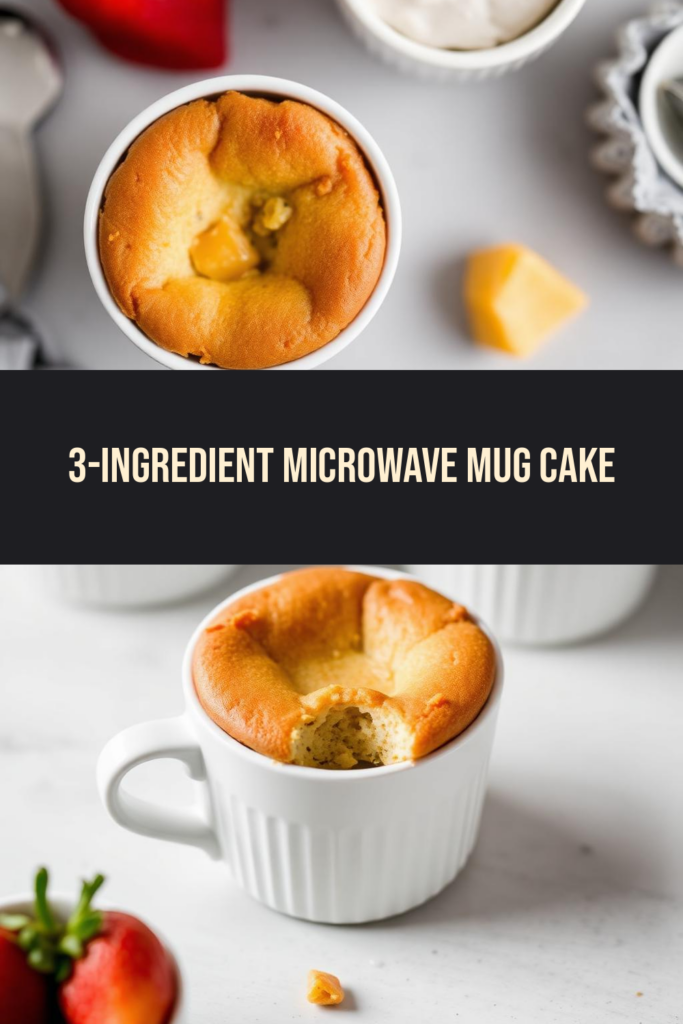
A 3-ingredient microwave mug cake is a single-serving cake made in a mug using self-rising flour, sugar, and milk, with the microwave doing the baking in about 90 seconds. The ratio of these three ingredients determines whether you get a tender crumb or a rubbery disk, so measuring by volume matters more here than in oven baking. This recipe suits a quick dessert, a late-night snack, or a way to use up the last of a box of self-rising flour.
Ingredients
- 4 tablespoons (32 g) self-rising flour
- 3 tablespoons (36 g) granulated sugar
- 3 tablespoons (45 ml) whole milk (or any milk)
- Optional: 1/4 teaspoon vanilla extract, 1 tablespoon chocolate chips, or 1/2 teaspoon cocoa powder
Instructions
- In a 12-ounce (355 ml) microwave-safe mug, stir together the self-rising flour and sugar with a fork until no lumps remain.
- Add the milk (and vanilla or other mix-ins if using). Stir with the fork until a smooth batter forms, scraping the bottom and sides of the mug. The batter will be thick, not pourable.
- Microwave on high for 90 seconds. The cake will rise above the rim of the mug during cooking and may look slightly wet on top when done. If your microwave runs hot, start with 60 seconds and add 10-second bursts until the top is just set.
- Let the mug cake cool in the microwave for 1 minute before eating. The cake will sink slightly as it cools, which is normal.
Why the Batter Ratio Matters
Self-rising flour already contains baking powder and salt, so you do not need to add leavening. The sugar provides sweetness and helps the cake brown; the milk provides liquid and fat (if using whole milk). The ratio of 4 tablespoons flour to 3 tablespoons sugar to 3 tablespoons milk gives a moist, tender crumb. If you use a larger mug, the cake will spread thinner and cook faster, so reduce the time to 60 seconds. If you use a smaller mug, the batter will be deeper and need 10-20 seconds more.
What Happens If You Change the Amounts
- More flour (5 tablespoons): The cake will be drier and more bread-like, with a tighter crumb.
- More sugar (4 tablespoons): The cake will be sweeter and may have a slightly sticky top.
- More milk (4 tablespoons): The batter will be thinner, and the cake will be more likely to collapse or stay gummy in the center.
Substitutions and Add-Ins
- Self-rising flour: For every 4 tablespoons, substitute 4 tablespoons all-purpose flour plus 1/4 teaspoon baking powder and a pinch of salt. This changes the texture slightly, making it a bit denser.
- Milk: Use any milk you have—dairy, oat, almond, or soy. Lower-fat milks (like skim) will make the cake slightly drier; higher-fat milks (like whole or coconut) make it richer.
- Sugar: Use brown sugar for a molasses flavor and a slightly moister crumb, or granulated for a cleaner sweetness. Do not use liquid sweeteners like honey or maple syrup without reducing the milk by 1 tablespoon, or the batter will be too wet.
- Mix-ins: Add 1 tablespoon chocolate chips, 1/2 teaspoon cocoa powder (plus 1 teaspoon extra milk), 1/4 teaspoon cinnamon, or 1 teaspoon peanut butter. Stir them in with the milk.
Why It Can Come Out Wrong (and How to Fix It)
Too Dry
A dry, crumbly cake usually means the batter was overcooked or the mug was too wide. Check your microwave wattage: a 1200-watt microwave will cook faster than a 700-watt one. Start with 60 seconds and add 10-second bursts. Also, use a mug that holds at least 12 ounces (355 ml) so the batter is not too deep.
Too Runny or Gummy in the Center
If the center is wet and sunken, the batter was undercooked or had too much milk. Cook in 10-second increments until the top is just set and a toothpick inserted in the center comes out with moist crumbs, not wet batter. If you added extra mix-ins that contain moisture (like fresh berries), reduce the milk by 1 teaspoon.
Too Dense or Rubber
Overmixing the batter develops gluten, which makes the cake tough. Stir only until the flour is moistened—about 15 seconds. Also, do not press the batter down; leave it loose in the mug. If you used all-purpose flour with added baking powder, make sure the baking powder is fresh (within 6 months of opening).
Storage and Reheating
This mug cake is best eaten immediately, as it loses its soft texture within an hour. If you must store it, wrap the mug in plastic wrap and refrigerate for up to 2 days. To reheat, microwave on 50% power for 20-30 seconds until warm. Do not freeze, as the texture becomes rubbery. If you are making this for a child, note that the cake contains milk and wheat; check for allergies. The cake is safe to eat once the internal temperature reaches 160°F (71°C) if you want to verify doneness with a thermometer, but the visual cue of a set top is sufficient.
Can I Double the Recipe?
Yes, but do not double it in the same mug—use two separate mugs. A double batch in one mug will not cook evenly; the edges will overcook while the center stays raw. If you want two servings, make two mugs side by side and microwave them together for 2 minutes, checking for doneness.
What If I Don’t Have Self-Rising Flour?
You can make a quick substitute: for every 4 tablespoons of self-rising flour, use 4 tablespoons all-purpose flour, 1/4 teaspoon baking powder, and 1/8 teaspoon salt. Mix these dry ingredients before adding the milk. This substitute will produce a slightly denser cake, but it will still be tender. Do not use baking soda instead of baking powder, as the batter has no acid to activate it.
Safe minimum internal temperatures follow USDA FSIS; raw-fish guidance follows the U.S. FDA. See our food safety notes.
Spotted an error? Tell us and we will correct it (corrections policy).